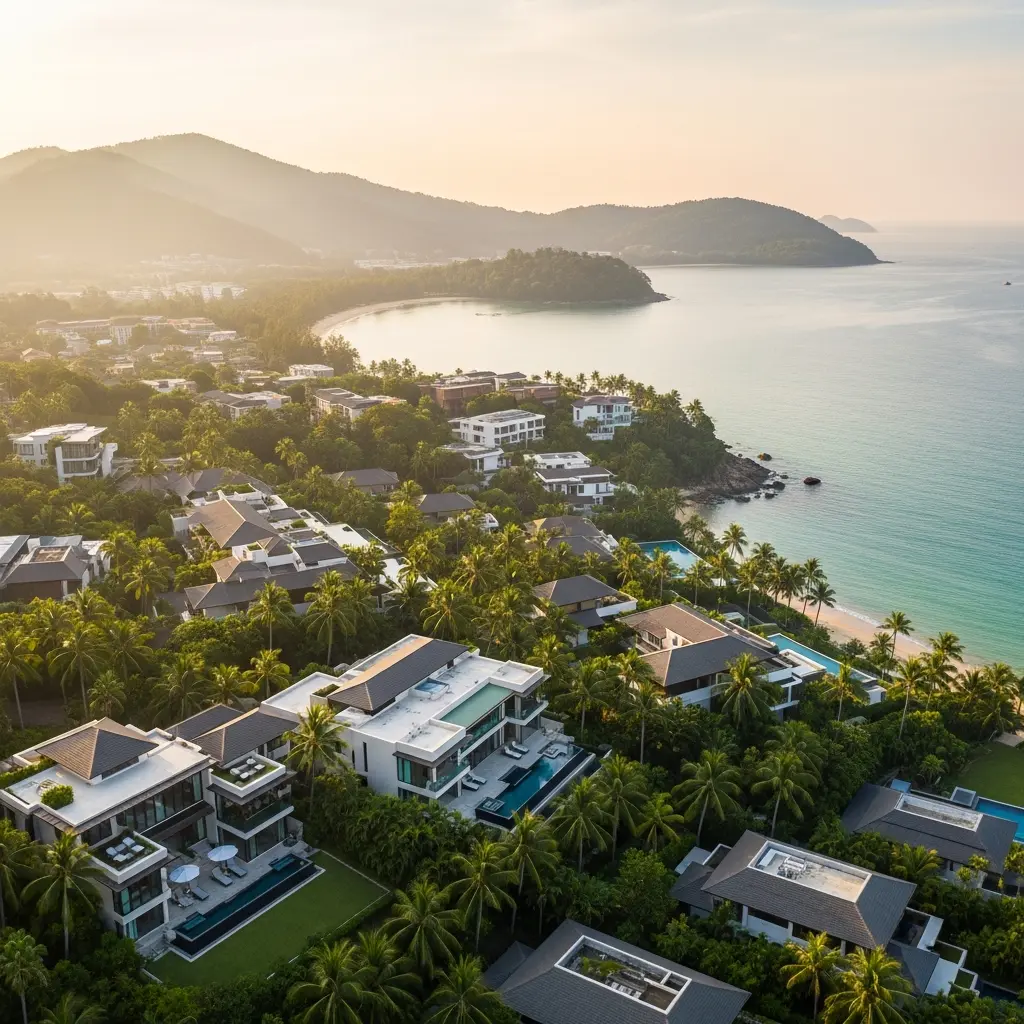
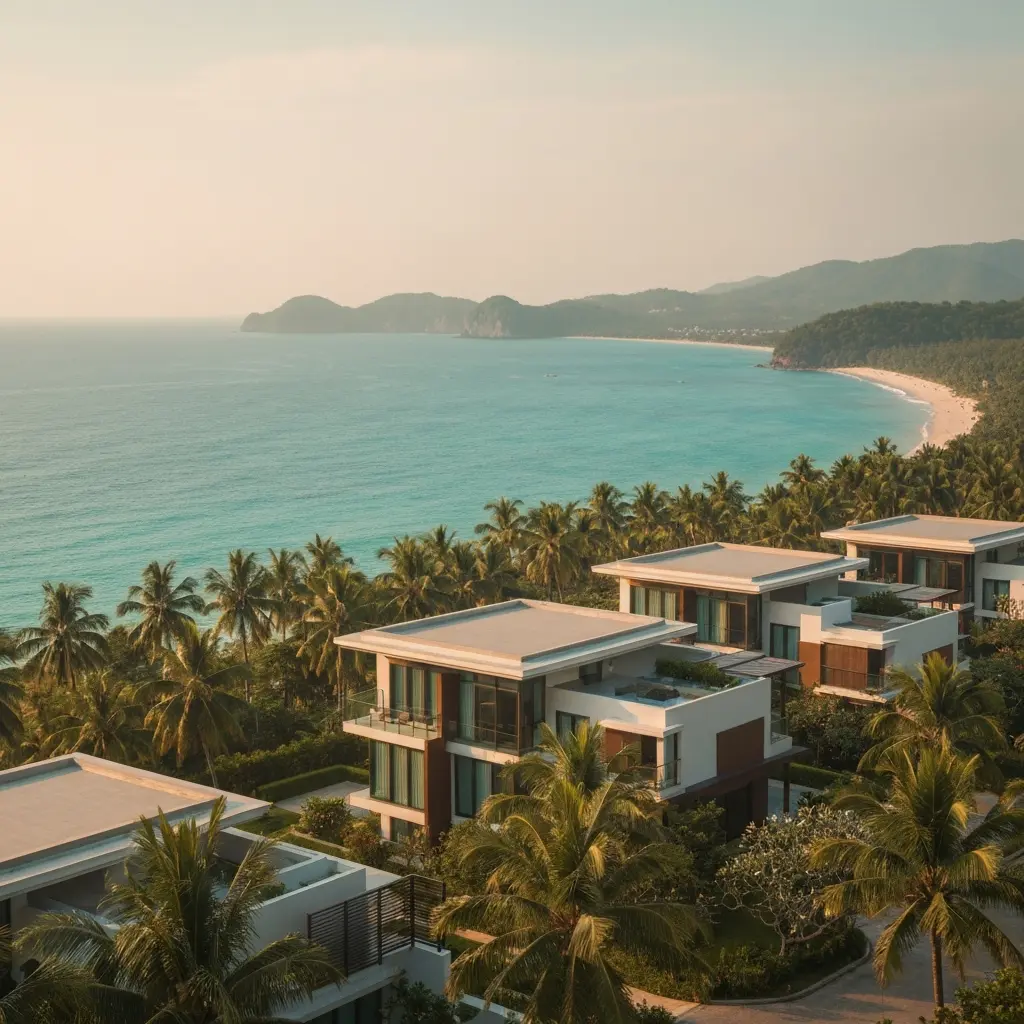
Bang Tao and Laguna are often treated as a single investment zone — they share a coastline, a beach and most of the same infrastructure — but in 2026 they have functionally split into two different investment products. Bang Tao is the higher-volume, broader-mix district with the heaviest new-supply pipeline on the island. Laguna is the integrated, Banyan Group-managed resort corridor with a longer absorption pattern and stronger brand-driven exit liquidity. The right choice depends less on the beach and more on what kind of investor you are.
This guide compares the two districts on the four metrics that actually matter for 2026 investors: realistic gross and net yields, occupancy patterns through the year, exit liquidity timelines, and the supply trajectory ahead. All figures are drawn from named 2026 market sources (Kalinka Thailand, MORE Group, Banyan Group, Anan Property Group) listed in the references section.
Infrastructure: Endogenous vs Networked
Laguna Phuket is one of Asia's longest-running integrated resort developments, anchored by the Banyan Tree, Angsana and Dusit Thani brands and supported by the Banyan Group residential portfolio. The district contains a championship golf course, an extensive trail network, a private beachfront club on Bang Tao Beach, the Banyan Group's sports and aquatic facilities, and an internal road and shuttle system. The newest development, Laguna Lakelands by Banyan Group Residences (launched 2025-2026), spans more than one million square metres of lake-view residential land adjacent to the existing Laguna resort and adds to the rental management ecosystem through Banyan Living.
Bang Tao operates differently. Outside the Laguna boundaries, Bang Tao plugs into Phuket's broader transport grid via the 4025 and 4030 highways and depends on the wider commercial corridor around Boat Avenue, Porto de Phuket and the standalone beach-club venues for its lifestyle infrastructure. The result is a district that supports more property types and price points — small modern condos, mid-tier villas, luxury beachfront stock — and a broader tenant mix from short-stay holiday-let renters to long-stay digital nomads and relocating families.
Yields: What the 2026 Numbers Actually Look Like
Across the major 2026 Phuket market analyses, the headline gross and net figures cluster within a narrow range. Kalinka Thailand's April 2026 district analysis is the most detailed and is used as the primary reference below; MORE Group, Banyan Group and Anan Property Group provide supporting numbers.
- —Bang Tao Beach (1-bedroom condo, 45-55 sqm): Entry price 5-8M THB. Gross yield 7-8%. Net yield 4.5-6% after CAM (40-80 THB/sqm/month), 20-30% management fees, and 5-15% rental income tax. Average occupancy 70-75% year-round. Nightly rate 2,000-3,500 THB. (Kalinka Thailand, April 2026.)
- —Bang Tao and Laguna combined (broader sample): Gross yields 6-9% annually, with luxury Laguna-branded projects reaching 10-12% during peak season. Occupancy averaging 80-85% in high season (November-April) and 60-65% year-round — outperforming most other Phuket coastal districts. Capital appreciation around 7-8% per year in the mid-to-high segment. (Bang Tao Investment Guide / Banyan Group, 2026.)
- —Phuket condominiums island-wide (benchmark): Annual yields historically 6-8% gross, 4-6% net. Luxury villas 4-6% net. (Anan Property Group, April 2026.) The Bang Tao and Laguna corridor sits at the upper end of this range when properly managed.
- —Gross-to-net spread: Kalinka's 2026 data indicates the spread between gross and net runs at 2-3 percentage points, driven by management fees (20-30%), rental income tax (5-15%), and CAM plus maintenance (40-80 THB/sqm/month). Any back-of-envelope calculation that uses gross yield as actual return will overstate real performance by roughly a third.
Where the Numbers Differ Between the Two Districts
The yield ranges overlap, so the practical distinction is not raw percentage but variance through the year. Laguna's integrated resort management — particularly under the Banyan Living programme tied to Banyan Group properties — produces more even occupancy across high and low seasons, supported by family travel, MICE-style corporate stays and expat long-stays from the surrounding international school catchment. Bang Tao's broader tenant mix delivers similar headline numbers but with sharper seasonality: stronger peaks during high season and deeper low-season troughs when independent operators face the full force of off-season supply competition.
Exit Liquidity: Where Laguna's Brand Premium Shows Up
On exit, the two districts diverge more clearly than on yield. Kalinka Thailand's April 2026 data identifies the Bang Tao and Laguna corridor as 'the strongest [exit liquidity] on the island', with the Laguna area specifically noted as 'one of Phuket's most recognised property brands' and typical resale completing within 3-6 months. MORE Group's May 2026 outlook reaches the same conclusion: 'choose Bang Tao/Laguna for liquidity and international resale.'
Bang Tao Resale: Broader Buyer Pool
The wider price spread (5-8M THB entry condos through to multi-million-dollar beachfront villas) gives Bang Tao a deeper buyer pool by volume — more transactions per year and more granular price discovery. Marketing periods of 3-6 months are typical for well-priced foreign-quota stock, per Kalinka 2026. Risk factor: Bang Tao has the heaviest new-supply pipeline on the island in 2025-2026 (MORE Group, May 2026), meaning sellers compete against new launches as well as resale comparables.
Laguna Resale: Brand-Anchored Buyer Pool
Laguna stock — whether older Banyan Tree-era residences or newer Banyan Group Residences and Laguna Lakelands inventory — benefits from international brand recognition and the existing rental-management ecosystem (Banyan Living, Sanctuary Club membership). The buyer pool skews toward international investors familiar with the brand. Typical resale completes within 3-6 months for properly priced units, with Laguna specifically called out as one of Phuket's most recognised property brands by Kalinka (2026). Listings that price above the prevailing market or carry burdensome management contracts can sit materially longer.
"Bang Tao and Laguna lead for rental income stability and exit liquidity. A 45-55 sqm one-bedroom unit near Bang Tao Beach is priced at 5-8M THB. Gross yield: 7-8%. Net yield: 4.5-6%. Exit liquidity is the strongest on the island — the Laguna area is one of Phuket's most recognised property brands, and resale typically completes within 3-6 months."
Next Step
Always Verify Foreign Quota Before Locking Capital
Foreign Quota availability shifts between contract and closing in active buildings — the cap is calculated by foreign-owned floor area, not by unit count. Verify current quota with the Juristic Person and the local Land Office for the specific building before signing any SPA without a quota-availability contingency. We can introduce vetted independent Thai property counsel for this work.
Supply Trajectory: The Underrated Variable
Supply is the variable most often missed when investors compare districts on yield alone. MORE Group's May 2026 outlook is explicit: 'Bang Tao has the highest pipeline of new supply in 2025-2026.' That pipeline is being absorbed by genuinely strong demand — Phuket's prime west-coast prices have risen roughly 23-29% since 2023 — but it changes the resale dynamic. A Bang Tao seller in 2026 is competing for buyers against new-launch inventory in the same micro-location, while a Laguna seller within an integrated resort generally is not.
For an investor with a 24-36 month exit horizon and good operational management capacity, Bang Tao's higher supply does not necessarily compress returns — it just requires more active pricing discipline at exit. For a 5-7 year hold prioritising hands-off management and brand-supported resale, Laguna's controlled supply release through Banyan Group and the integrated rental-management infrastructure shifts the case toward Laguna stock despite the often similar yields.
Decision Framework: Match the District to the Investor
The Bang Tao vs Laguna decision in 2026 reduces to a small number of investor-type questions. The yields overlap; the difference is in the operating model and exit conditions.
- —Active investor, 2-3 year horizon: Bang Tao's broader inventory and price points support tactical entry at the bottom of the local price band and active short-term-rental optimisation. Be prepared to compete on price and listing quality against new-launch supply in the same area.
- —Passive investor, 5+ year horizon: Laguna's brand-managed rental programmes (particularly under Banyan Living) and the integrated resort infrastructure suit buyers who want predictable cash flow and minimal day-to-day involvement. Capital appreciation has tracked the same general band as Bang Tao in recent cycles, but with smoother quarterly variance.
- —Family or relocator buyer: Both districts work, but Laguna's combination of international school proximity, integrated wellness/sports facilities and resort-grade security typically wins for owner-occupier use. Bang Tao tends to suit relocators wanting more walkable street-level life around Boat Avenue and Porto de Phuket.
- —Crypto / international transfer buyer: Both districts support crypto-settled transactions via SEC-licensed Thai exchanges where the developer accepts them and the proper FET form is generated. Bang Tao has seen a higher concentration of crypto-payment-marketed developments in 2026 (Showmehome, March 2026).
Whichever district fits the investor profile, two universal precautions apply in 2026: verify the specific building's Foreign Quota availability with the Juristic Person and local Land Office at the time of contract (not at the time of viewing — quota can fill in the gap), and use independent Thai property counsel rather than the developer's preferred firm. Both districts have plenty of compliant inventory; both also contain projects where the marketing materials sit some distance from the operational reality.