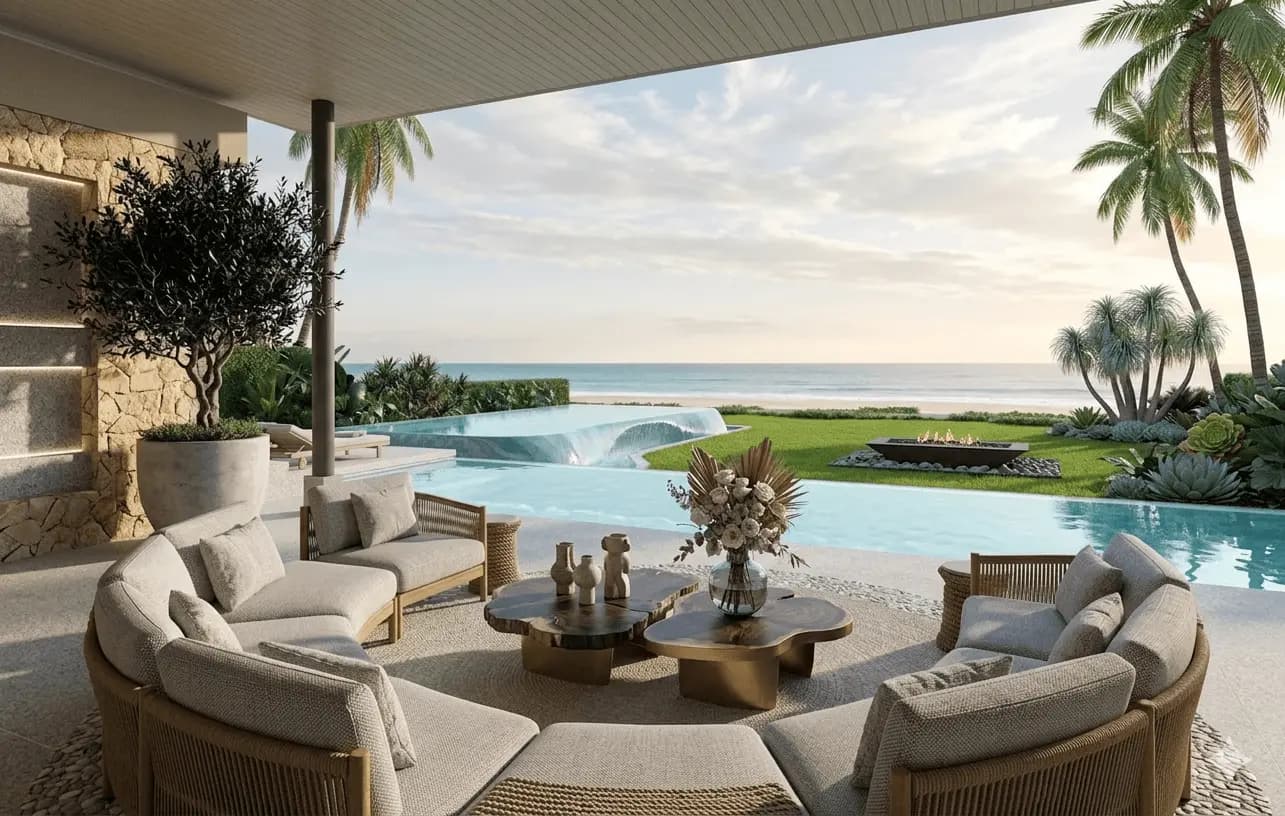
Villa Saengdao Nai Harn: $890K Villa Near the Beach
A representative near-beach Nai Harn villa profile - what $890k really buys, and why the shore itself stays public
Financial Strategy
ROI & Performance
Projected Growth
At around $890,000 — roughly 29 million THB at about 32.6 THB/USD as of mid-2026 — this sits in the upper-middle band of the Nai Harn villa market, well below what genuine front-line coastal property commands on Phuket: true oceanfront villas on the island trade from several million dollars upward in enclaves like Cape Yamu, Natai and the north end of Kamala, so the price alone tells you this is a near-beach asset, not a waterfront one.
Entry Valuation
USD 890000
Starting Price / Off-Plan
On income, a well-managed villa here might realistically net around 4-6% as a market estimate, after management fees of roughly 20-30%, upkeep and the elevated exterior maintenance that coastal proximity imposes; peak-season nightly rates in this segment carry a premium, but any sub-30-day letting model first has to clear the hotel-licence requirement under the Hotel Act B.E. 2547, and enforcement is active in south Phuket. Where rent is collected for a non-resident owner by a Thai company or management firm, withholding at source is 15% of gross rent (Revenue Code Sections 50(3) and 70), creditable against a final Thai return. On the capital side, appreciation in prime Phuket corridors has been estimated at around 5-8% a year (MORE Group, 2026), with the tightest micro-markets estimated at up to 7-10% (Knight Frank) — market estimates, not promises, and Nai Harn's constrained hillside and parkland surroundings support the supply story without guaranteeing it. Realistic full-capital payback on rental income alone runs 10-14 years for villas in this market; anything quoted much shorter deserves scrutiny rather than excitement.
Specification
Premium Features
- —Representative near-beach villa profile at around $890,000, within walking distance of Nai Harn Beach
- —Marine-grade 316-type stainless fittings and weather-sealed glazing suited to coastal exposure
- —Nai Harn consistently rated among Phuket's best swimming beaches, with a settled residential hinterland
- —Parkland, the lagoon and hillside building constraints support the bay's low-density character
- —Registered 30-year leasehold is the legitimate ownership route for foreign buyers of villa land
- —Net yields around 4-6% as a market estimate; sub-30-day letting requires a hotel licence
The Setting
Lifestyle & Location
At around $890,000, this profile — presented here under the Villa Saengdao label — represents the near-beach villa segment of Nai Harn rather than a specific transacted building, and the first thing worth setting straight is the word 'beachfront'. In Thailand the beach itself is public domain, and Phuket's coastal environmental rules keep private construction set back from the waterline, so a villa with a private plot line running down onto the sand is not a product that exists here at any price — least of all at this one. At Nai Harn specifically, the front line of the bay is held by a resort hotel and by public parkland around the lagoon behind the beach, which is precisely what keeps the bay so uncrowded and swimmable. What $890,000 realistically buys in this market is a private pool villa within walking distance of the sand — a genuinely strong position, just not a private piece of the shore. Read that way, the proposition is honest and attractive. Nai Harn is consistently rated among Phuket's best swimming beaches, and the neighbourhood behind it — the lake, the wat, the morning-market strip toward Rawai — has a settled, residential feel that the west-coast resort corridors lack. Proximity to the sea still shapes the build quality that matters: salt-laden air accelerates corrosion and weathering, so marine-grade 316-type stainless fittings, weather-sealed glazing and disciplined exterior maintenance are genuine value items in this micro-market rather than brochure padding — and they are also a real, recurring cost that a buyer should carry into any income model. On ownership, the ground rules come first: a foreigner cannot own the land under a villa in Thailand (Land Code Section 86). The legitimate route is a registered 30-year lease of the land — only the first term is statutory, with renewals resting on contract rather than automatic right — and the 'Thai company' route sometimes offered for villa land relies on nominee shareholders and is illegal, with active enforcement in 2026. If a listing in this bay is priced dramatically below what genuine front-line property trades for elsewhere on the island, treat the gap itself as the due-diligence signal: confirm the exact plot, title and distance to the sand in person before relying on any 'beachfront' headline.
Due Diligence