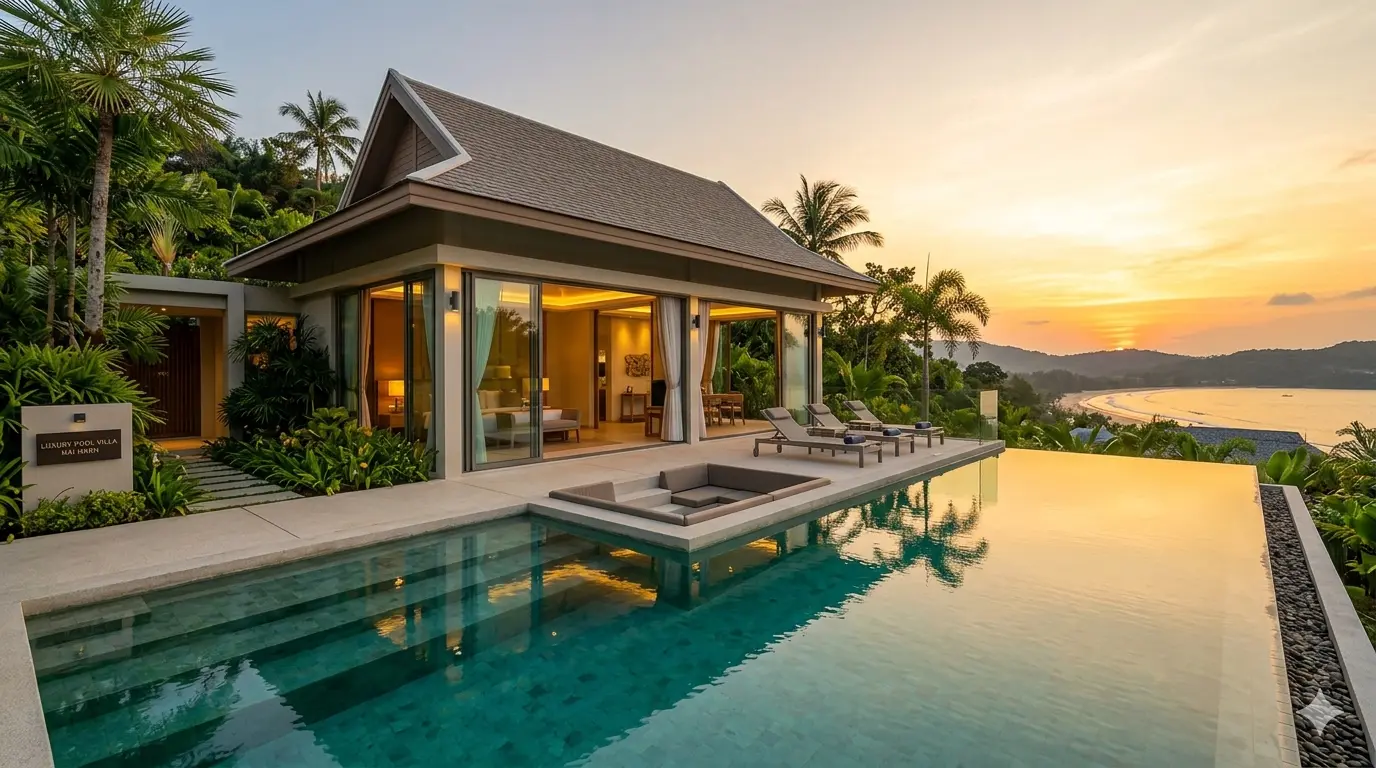
Nai Harn Cliffside Sea-View Villa: $1.3M Leasehold Profile
A representative cliffside profile above Nai Harn Bay - 2026 ownership rules, real holding costs, and why 'freehold' here means leasehold
Financial Strategy
ROI & Performance
Projected Growth
On ownership frameworks: marketing a landed property in this bracket as foreign 'freehold via a Thai company' is not a grey area - it is the nominee structure that the Department of Business Development and the Land Department have been actively dismantling through 2025 and 2026.
Entry Valuation
USD 1300000
Starting Price / Off-Plan
Under DBD Order No. 1/2026 (effective 1 April 2026), corporate landholders face a substance-based test of genuine capitalisation and real Thai partnership; violations bring forced land liquidation, asset seizure and personal prosecution of directors. For a foreign buyer of a residence at around $1,300,000, the legitimate route is a registered 30-year leasehold at the Land Department, with renewal options written as contractual promises rather than automatic rights - independent legal review before any deposit is non-negotiable. On yields and operating costs: a cliffside asset of this scale carries exceptional running costs. High-salinity exposure accelerates structural weathering and demands budgeted protective coatings, while hillside water-pumping and retaining systems push common-area overhead well above flat-land norms. Peak-season nightly rates carry a real premium, but as a market estimate the stabilised net yield realistically sits around 3-5% a year once 20-30% management fees, vacancy cycles and that elevated upkeep are counted - the low end of the island's villa range precisely because the operating base is so heavy. Any nightly-let model must first clear the hotel-licence requirement for stays under 30 days (Hotel Act B.E. 2547). Where rent is collected for a non-resident owner by a Thai company or manager, withholding at source is 15% of gross rent (Revenue Code Sections 50(3) and 70), creditable against a final Thai return. Capital appreciation in prime Phuket corridors has been estimated at around 5-8% a year (MORE Group, 2026) - a market estimate, not a promise, and this zoning-constrained corridor supports the supply story without guaranteeing it. At transfer, the standard 2% Land Department fee applies on the higher of appraised or sale value, plus stamp duty or specific business tax depending on the seller's holding period.
Specification
Premium Features
- —Elevated cliffside position on the southern promontory with wide views over Nai Harn Bay - confirm sight lines and hillside zoning in person
- —Cantilevered living deck and infinity pool extended over the slope for privacy above the public beach
- —Registered 30-year leasehold is the legitimate route for foreign buyers - foreigners cannot own villa land
- —Net yields around 3-5% as a market estimate, reflecting heavy coastal upkeep and 20-30% management fees
- —Marine-grade 316-type stainless components and low-emissivity retracting glass suited to salt and UV exposure
- —Within roughly a 15-minute drive of Chalong Pier boat moorings and international schools such as BCIS
The Setting
Lifestyle & Location
Perched on the granite promontory rising south of Nai Harn Bay, this representative cliffside profile at around $1,300,000 shows what the top of the local villa market buys: a cantilevered living deck and infinity pool extended over the slope, with wide, elevated views across the bay and the Andaman beyond. The elevation is the point - it lifts the living space clear of the public beach below and gives the outlook its drama - but treat no view as permanent: confirm the sight lines in person and check the hillside zoning of neighbouring plots before pricing the panorama into the deal. The engineering that matters at this exposure is specific and worth verifying line by line. Salt-laden air and intense UV accelerate weathering, so marine-grade 316-type stainless fittings and low-emissivity (Low-E) retracting glass facades are genuine value items rather than brochure padding - as are the retaining structures and pumping systems that hillside sites depend on. Logistically the south works well: the estate sits within roughly a 15-minute drive of Chalong Pier, the south's main launch point for private boats, and of international schooling such as BCIS, balancing seclusion with everyday expat infrastructure. On ownership, the word 'freehold' in this page's address needs a plain reading: it is a marketing term, not a legal description. Foreigners cannot own land in Thailand (Land Code Section 86), so a landed villa like this cannot be held freehold by a foreign buyer at any price. The legitimate route is a registered 30-year lease of the land - only the first term is statutory, with renewals resting on contract rather than automatic right - and the 'Thai company' route sometimes offered for villa land relies on nominee shareholders and is illegal, with active enforcement in 2026. The compliant frameworks are set out plainly below.
Due Diligence