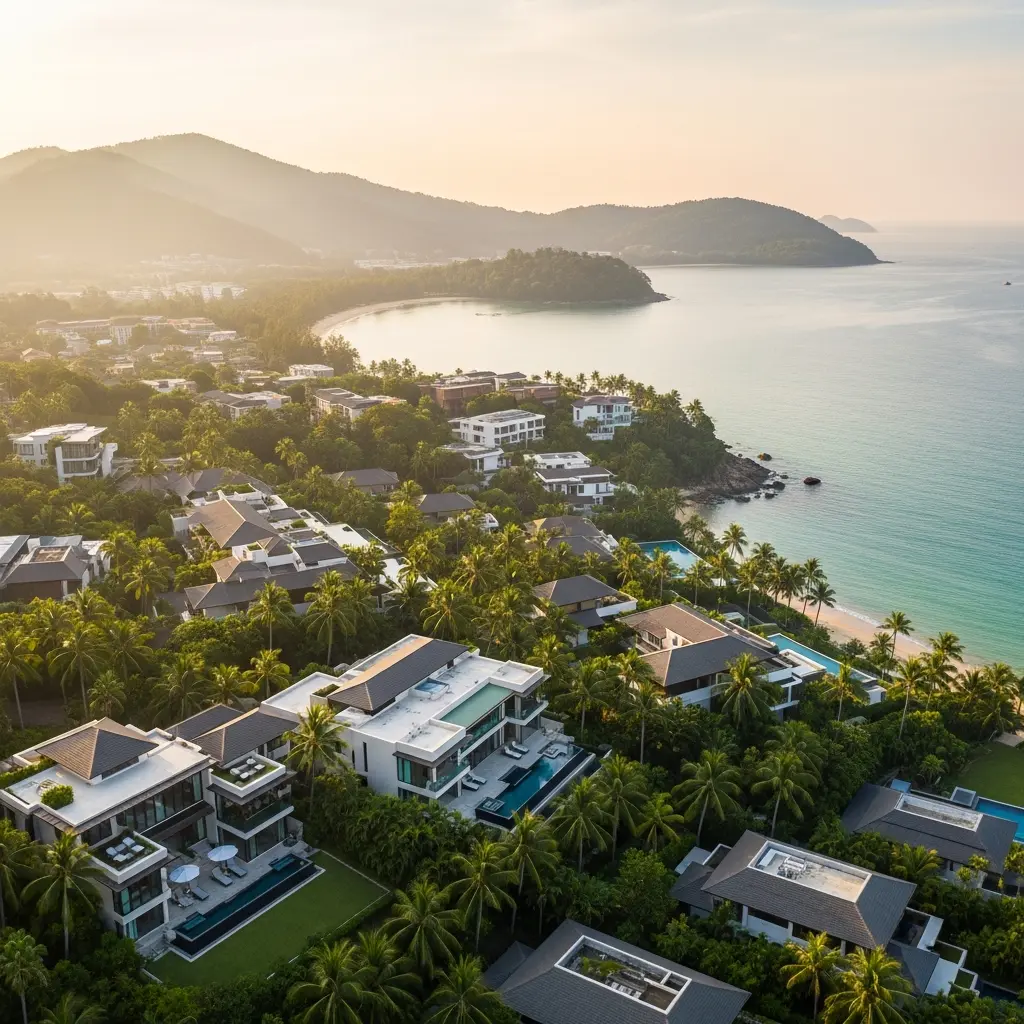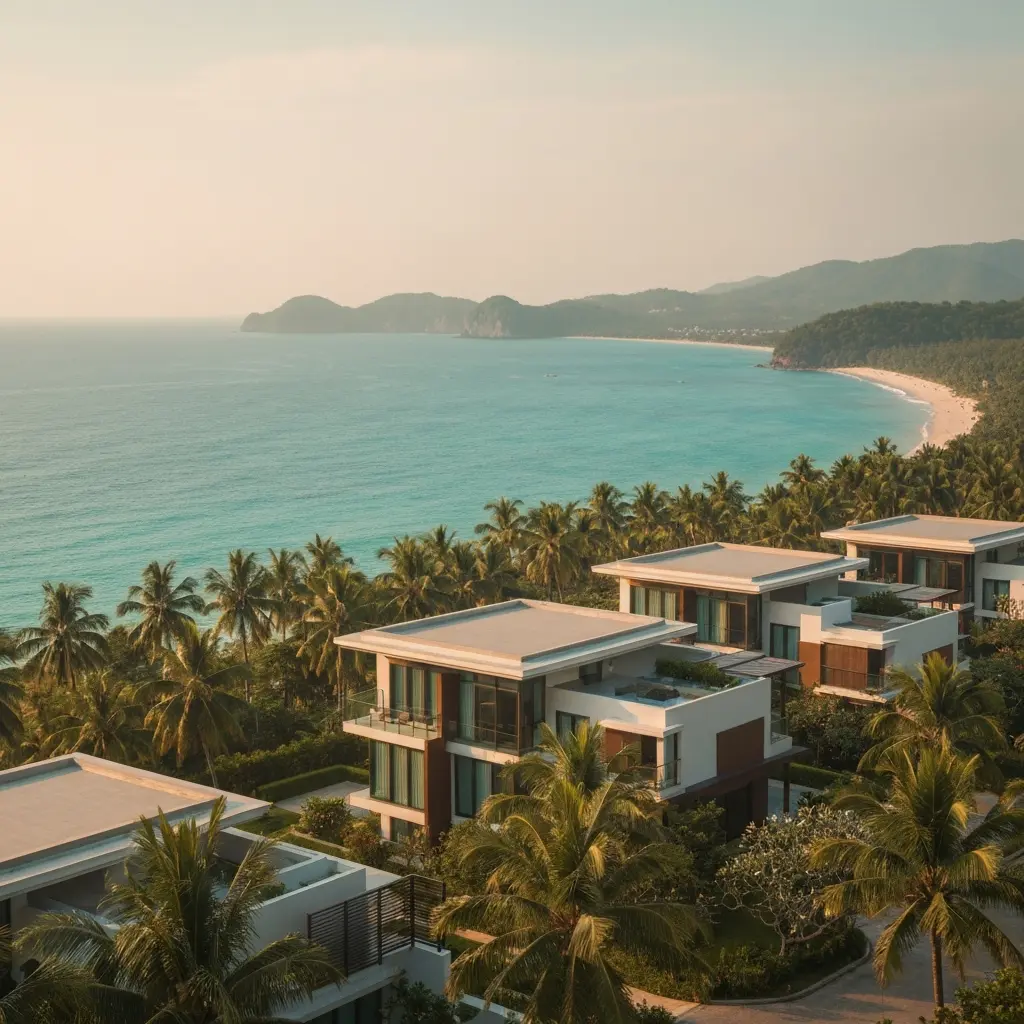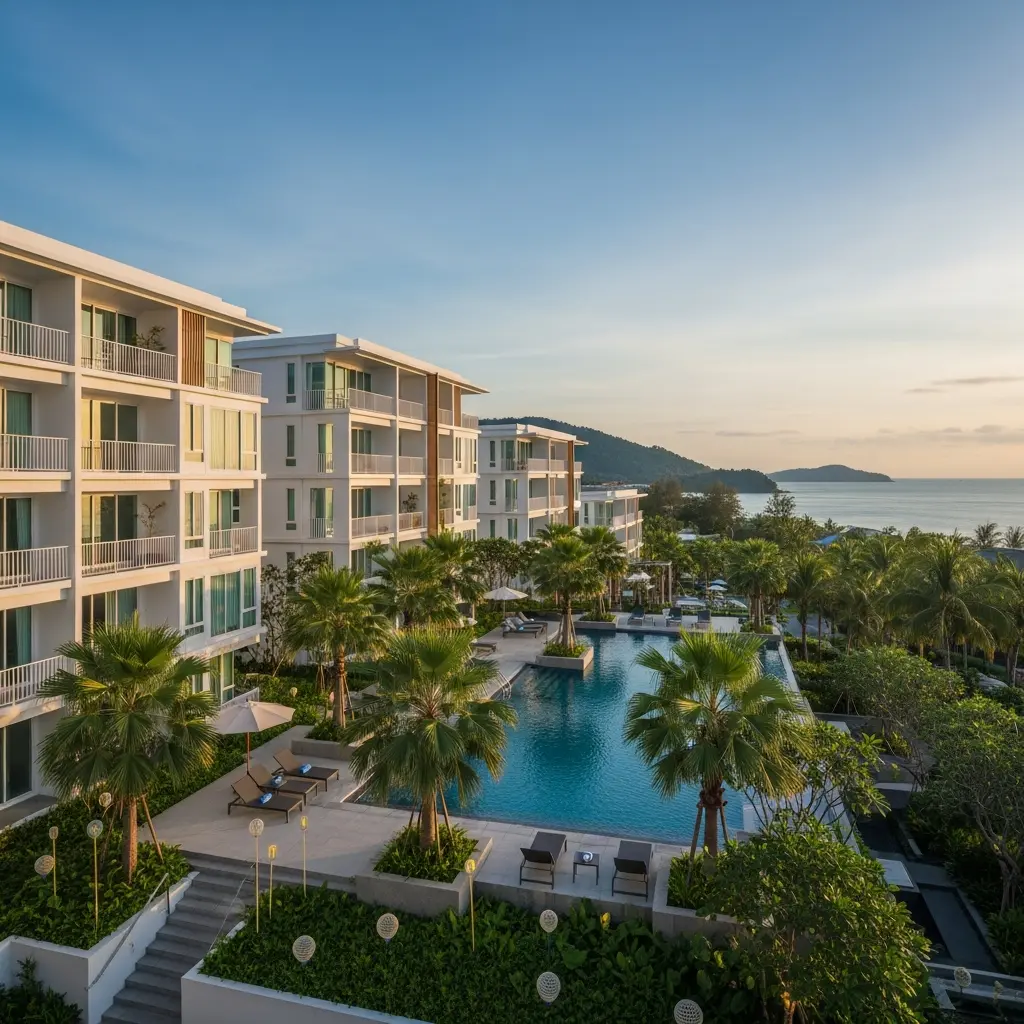
Phuket carries deep condominium stock for a resort market, spread across island neighbourhoods that behave very differently. A one-bedroom in a hillside building above Patong, a low-rise unit behind Bang Tao beach and a resale apartment in Phuket Town are three separate markets that happen to share an island. Understanding which segment you are shopping in matters more than any single price figure.
This page is about the market rather than the paperwork. It covers where the buildings cluster, what the two dominant product types mean for your monthly costs and your letting options, and what the 2026 numbers genuinely support on yield and occupancy. Ownership mechanics get one short section here, because the per-building foreign quota, quota confirmation and the remittance path are covered in depth in our Phuket freehold guide.
Across the listings we track, Phuket property ran from approximately USD 130,000 for entry-level condominium units up to USD 2,500,000 and above for luxury villas as of May 2026, depending on location and property type. Condominiums sit at the accessible end of that band, which is exactly why the segment attracts most first-time Thailand buyers.
Where Phuket condo stock clusters
Patong and the Kalim headland immediately north of it hold the densest resort-core stock on the island. This is where you find high-rise and hillside buildings, many of them with sea views over the bay, tight walkability to the beach and nightlife, and the shortest rental lead times because the tourist flow is year-round and largely walk-in. It is also the noisiest and most crowded part of the island, and building quality varies sharply from one project to the next.
Head north and the character changes. Surin, Bang Tao and the Laguna edge carry Phuket's upscale low-rise stock: smaller buildings, larger unit layouts, more landscaping, beach clubs and international schools nearby. This is the part of the island where hospitality brands have concentrated, and where a lot of the newer condominium supply has been aimed at buyers who want a managed second home rather than a purely numerical investment. Kamala sits between the two worlds, with a quieter beach than Patong and a smaller, more mixed inventory than Bang Tao.
The south around Rawai and Nai Harn is quieter again, more residential, and popular with long-stay residents rather than short-break tourists. Buildings tend to be smaller and set back from the water, and the rental pattern leans towards monthly tenants. Phuket Town is a genuine market in its own right, but it trades on local demand, local pricing logic and local resale liquidity, which is why most foreign buyers skip it. If you are comparing the northern beaches head to head, our Bang Tao and Laguna comparison goes deeper on that pairing.
Next Step
Related Reading
Continue with related guides and representative listings on this topic.
Two product types: branded residences and standalone buildings
Almost every Phuket condominium falls into one of two categories, and the difference shapes your ownership experience far more than the floor plan does.
Branded and resort-residence buildings come with a hospitality management layer. A hotel operator or an in-house management company runs the front desk, the housekeeping, the pool and, usually, an optional rental programme that pools units and splits revenue with owners. The upside is that letting is turnkey and the property is maintained to a commercial standard whether you are on the island or not. The trade-offs are higher common-area maintenance charges, a revenue split that takes a meaningful share of gross rent, and rules that may limit how you furnish or personally use the unit during peak weeks. Read the management agreement as carefully as the sale contract, including its term, its termination clauses and who pays for refurbishment cycles.
Standalone buildings are governed by a juristic person and an owners' committee. There is no hospitality operator taking a cut, common-area fees are usually lower, and you have more freedom in how you let and furnish the unit. In exchange, you are dependent on the quality of the committee and the manager it appoints, you arrange letting yourself or through an agent, and you should expect service standards to track whatever the fee budget supports. Ask for the last two years of accounts, the sinking-fund balance and the minutes of recent general meetings before you commit.
Ownership: freehold within the quota, registered lease after it
Condominiums are the one Thai property class where foreign buyers can hold freehold title in their own name. That right is capped: under the Condominium Act B.E. 2522, Section 19, foreign owners may collectively hold up to 49 percent of the total floor area of any single building. The proposal to raise that ceiling to 75 percent has not been enacted and remains under review as of mid-2026, so plan on 49 percent standing.
When a building's foreign allocation is already full, the practical alternative is a registered leasehold interest in the unit. Only the first 30 years of a lease is statutory; any renewal beyond that is a contractual promise between the parties, not a guaranteed extension, and it should be priced accordingly. A registered lease is also a different legal instrument from a usufruct, and the two should never be treated as interchangeable.
For how the quota is calculated, how to obtain written confirmation from the juristic person that quota space exists for your specific unit, and how the funds path is documented, see our Phuket freehold guide, which owns those mechanics. If you want the national-level framing of freehold versus leasehold across condominium markets in Thailand, start with the Thailand condos overview.
What the numbers support
Phuket condominium yields commonly land in a band of 6 to 8 percent gross and 4 to 6 percent net (market estimate, April 2026; source: Kalinka Thailand, Phuket Property ROI 2026, condo segment). The gap between those two figures is the part buyers underestimate: common-area maintenance, sinking-fund contributions, management or programme commissions, furnishing replacement, vacancy and tax all sit inside it. A gross figure quoted without the cost stack behind it is a marketing number.
On occupancy, the benchmark worth knowing is roughly 70 to 75 percent year-round, and it is measured on well-managed one-bedroom condominium stock in Bang Tao (market estimate, April 2026; source: Kalinka Thailand, Phuket Property ROI 2026). That is a specific segment in a specific location with active professional management. It should not be read as an island-wide condo average, and it does not transfer to villas, which are a different rental product entirely.
Guaranteed yield offers deserve a plain description. They are prepaid rent, funded by a purchase-price premium that typically runs 10 to 15 percent (2026 estimate; source: AI Property Phuket). You are largely being paid back your own money on a schedule, and once the guarantee period ends returns commonly compress to roughly 3 to 5 percent net (2026 estimate; source: Kalinka Thailand). The comparison that matters is the guaranteed unit's price against an equivalent unit without the programme, which is exactly what our guaranteed ROI versus actual yield analysis works through.
On price, treat any single figure you see quoted for a neighbourhood with suspicion until you have seen recent comparable transactions in the same building type. Across our tracked Phuket listings in May 2026, the overall range began at approximately USD 130,000 for entry-level condominiums; within that, sea-view and branded stock on the west coast sits well above the island median, and inland or older buildings sit below it.
Next Step
Related Reading
Continue with related guides and representative listings on this topic.
Letting rules you have to check before you buy
Two separate gates control short-term letting, and both are property-specific.
The first is national law. Renting a unit for stays of under 30 days is a hotel-type activity and requires a hotel licence under the Hotel Act B.E. 2547. Very few individual condominium units hold one; licences are typically held at building or operator level, if at all. Any nightly-rate revenue projection you are shown only exists lawfully if the licence position is confirmed, so ask for evidence of licence status rather than assurances about what other owners do.
The second gate is the building itself. A juristic person's regulations can restrict or ban short lets independently of what the Hotel Act allows, can require registration of tenants, and can impose access rules on guests using shared facilities. Committees also change these rules over time by resolution. Get the current regulations in writing, in English, and check the minutes for any pending motion on letting. If your investment case depends on nightly rates, verify both gates before you sign anything, and if it depends on monthly tenants instead, confirm the minimum-term rule that applies in the building.
Buying sequence and buyer checklist
The sequence for a foreign freehold condominium purchase runs in a set order: purchase funds are remitted from abroad into Thailand in foreign currency; the receiving Thai bank issues the Foreign Exchange Transaction (FET) form recording that inbound remittance; the juristic person confirms in writing that foreign quota space is available for your unit; and the transfer is then registered at the Phuket Land Office, where transfer fees, stamp duty or specific business tax, and withholding tax are settled. That is the sequence only. The full documentary path, including who signs what and when, lives in our Phuket freehold guide. If you intend to settle in cryptocurrency, note that the conversion to fiat happens before the remittance leg and the bank still issues the FET; our crypto purchase guide covers that route.
Before you commit to a unit, work through the following.
- —Written foreign-quota confirmation: get a signed statement from the juristic person that quota space exists for your specific unit, not a verbal assurance from the sales office.
- —FET planning before transfer: agree the remitting account, currency and beneficiary details with your bank in advance so the FET is issued correctly the first time.
- —CAM and sinking-fund schedule in writing: ask for the current per-square-metre rate, the sinking-fund balance, arrears levels and any planned special levy.
- —Juristic-person rules on letting: obtain the current regulations and recent committee minutes, and check for any pending change to minimum rental terms.
- —Hotel-licence status if short lets matter: confirm in writing whether the building or its operator holds a licence under the Hotel Act B.E. 2547 before relying on nightly rates.
- —Independent lawyer: instruct a Thai-qualified lawyer who is not introduced by the seller or the developer to run title, quota and contract checks.
Next Step
Related Reading
Continue with related guides and representative listings on this topic.
Frequently Asked Questions
Can a foreigner own a Phuket condo outright?
Yes, within limits. Under the Condominium Act B.E. 2522, Section 19, foreign buyers can hold freehold title to a condominium unit provided foreign owners collectively hold no more than 49 percent of the building's total floor area. The proposal to lift that ceiling to 75 percent has not been enacted and remains under review as of mid-2026. Always obtain written confirmation from the juristic person that quota space exists for your specific unit before you pay a deposit.
What happens if the building's foreign quota is already full?
The usual alternative is a registered leasehold interest in the unit. Only the first 30 years of a lease is statutory, and any renewal beyond that term is a contractual promise rather than a guaranteed right, so it should be reflected in the price you pay. A registered lease is a distinct instrument from a usufruct and the two are not interchangeable. A quota-full building can still make sense, but it is a different asset with different resale liquidity.
What yields do Phuket condos realistically produce?
Commonly 6 to 8 percent gross and 4 to 6 percent net (market estimate, April 2026; source: Kalinka Thailand, Phuket Property ROI 2026, condo segment). The difference between gross and net is absorbed by common-area maintenance, sinking-fund contributions, management or rental-programme commissions, furnishing replacement, vacancy and tax. Ask any seller quoting a gross figure to show you the cost stack behind it.
Is 70 to 75 percent occupancy a realistic assumption for any Phuket condo?
No. That benchmark of roughly 70 to 75 percent year-round is measured specifically on well-managed one-bedroom condominium stock in Bang Tao (market estimate, April 2026; source: Kalinka Thailand, Phuket Property ROI 2026). It reflects active professional management in one strong location. It is not an island-wide average and it does not apply to villas, which are a different rental product.
Are guaranteed rental yield programmes worth taking?
Treat them as prepaid rent rather than as extra return. The guarantee is typically funded by a purchase-price premium of around 10 to 15 percent (2026 estimate; source: AI Property Phuket), and once the guarantee period ends returns commonly compress to roughly 3 to 5 percent net (2026 estimate; source: Kalinka Thailand). Compare the guaranteed unit against an equivalent unit without the programme, and check who is contractually liable if the developer's guarantee entity stops paying.
Can I put my Phuket condo on nightly booking platforms?
Only if the legal and building-level requirements are both satisfied. Stays of under 30 days are hotel-type activity requiring a hotel licence under the Hotel Act B.E. 2547, and licences are normally held at building or operator level rather than by individual owners. Separately, the juristic person's regulations can restrict short lets regardless of the licence position. Confirm both in writing before relying on nightly-rate income.