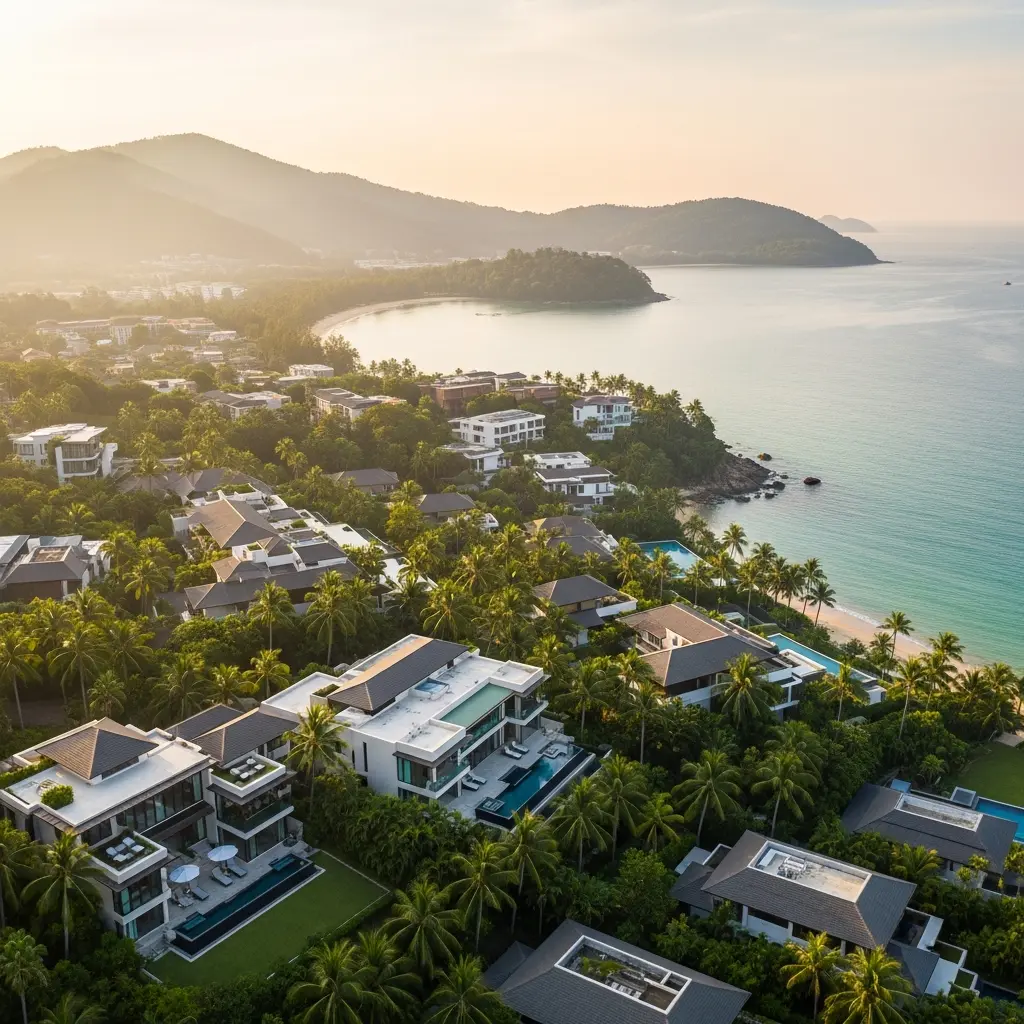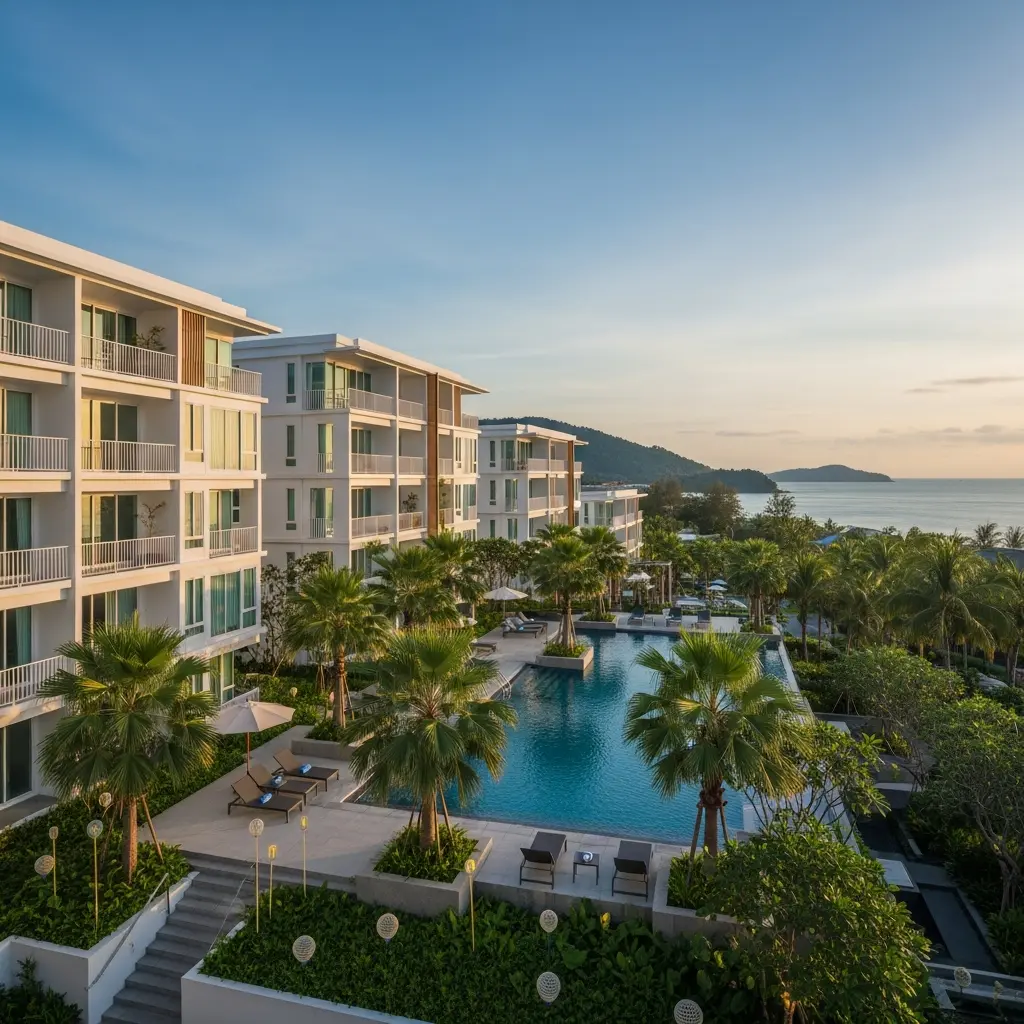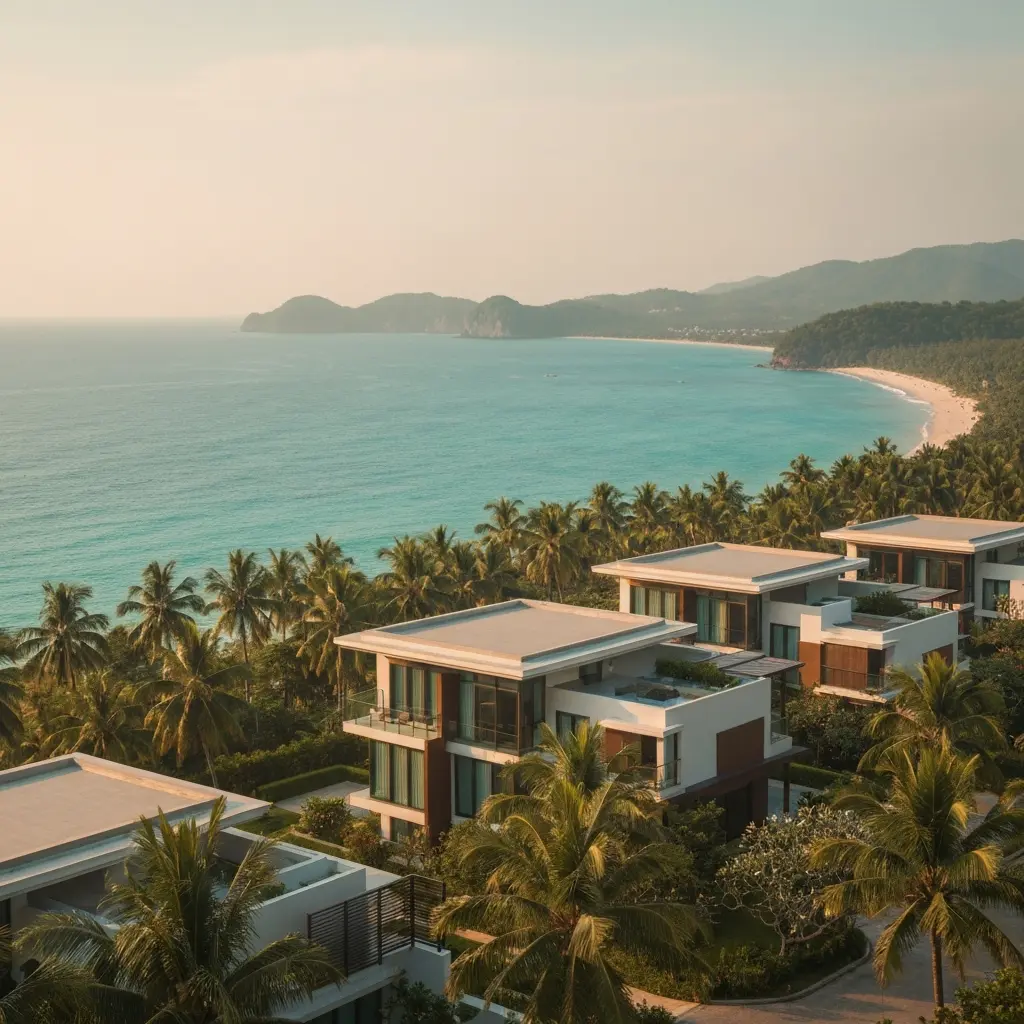
Laguna Phuket villas are advertised with gross yield figures that read well in a brochure and rarely survive contact with the estate's fee schedule. Prices across the wider Phuket market range from around $130,000 for entry-level condos to $2,500,000-plus for luxury villas (market estimate, mid-2026), and a golf- or lake-front villa inside Laguna sits toward the upper end of that range. What buyers usually want to know isn't the purchase price — it's what the villa actually pays out once the estate has taken its share.
This page walks through that gap. It covers the cost stack that sits between the gross number in a listing and the net number that lands in an owner's account, a worked example of how 7-9% gross commonly compresses to 4-6% net, occupancy and resale-time context for the Bang Tao/Laguna corridor, and a short checklist for reading any yield claim on a Laguna listing. For the district-level comparison against Bang Tao more broadly, see the dedicated comparison piece; for guaranteed-yield mechanics, see the guarantee guide linked below; for the legal framework behind villa ownership, see the freehold-vs-leasehold guide.
None of the figures here are guarantees. They are market estimates tied to a named source and a time marker, because that is the only honest way to talk about rental returns in a resort estate where fee schedules and occupancy vary property by property.
The Cost Stack Between Gross and Net
A Laguna villa's gross rental figure is calculated before the estate takes anything out. In practice, several layers sit between that number and what an owner actually receives. Rental-programme or hospitality-management fees commonly run 20-30% of rental income when a villa is let through the estate's or a resort operator's programme. On top of that, owners pay estate common-area maintenance, dedicated pool and garden upkeep (villas inside Laguna are almost always sold with private pools that need year-round servicing), and golf-club dues if the property sits on or near the course. Taken together, annual holding costs for a golf-front villa typically land in the order of USD 12,000-18,000 (market estimate, mid-2026). None of this is unusual for a managed resort estate — it's the price of having grounds, security and a rental desk handled for you — but it's routinely left out of the headline yield a listing quotes.
Next Step
Related Reading
Continue with related guides and representative listings on this topic.
A Worked Walk-Through: 7-9% Gross to 4-6% Net
Marketing materials for Laguna golf- and lake-villa stock often quote gross yields of 7-9%. Once management fees, CAM, pool/garden upkeep and golf dues are subtracted, realistic net returns commonly settle at 4-6% net (Kalinka Thailand, April 2026) — in line with the broader Phuket villa yield range that source reports. Well-managed golf- and lake-front units, where occupancy and pricing are both strong, are sometimes estimated higher, in the region of 5-7% net; treat that upper figure as a market estimate for mid-2026, not as a published benchmark. The spread between the marketing number and the net number is almost always the fee stack described above, not a sign the property is underperforming — it's simply what 'net' means once the estate's costs are applied. Any yield figure quoted anywhere on this page, or on a Laguna listing, should be read as an estimate tied to a time marker and a source, never as a guaranteed return.
Estate Rental Programme vs Independent Letting
Laguna villas are typically let one of two ways: through the estate's or a resort operator's rental programme, or independently by the owner. Programme letting operates under the resort's hospitality umbrella — this is how programmes such as those referenced in Banyan Group residences materials structure guest bookings, housekeeping and turnover, and it's reflected in the 20-30% management fee. Independent letting can look cheaper on paper, but any short-term let under 30 days requires a hotel licence under the Hotel Act B.E. 2547, regardless of who manages the booking. An owner letting independently and nightly is not exempt from that requirement simply because the villa sits inside a resort estate. If a guaranteed-yield programme is on the table, treat it as prepaid rent funded by a price premium rather than as a real yield — the mechanics are covered in full in our guaranteed-yield guide.
Occupancy and Seasonality on the Northwest Coast
The most widely cited occupancy benchmark for the Bang Tao/Laguna corridor is around 70-75% year-round, and it is measured on well-managed one-bedroom condominium stock rather than on villas (Kalinka Thailand, April 2026). Villa occupancy is not published at the same granularity and varies considerably by property, rental programme and price point, so read the condo figure as corridor context rather than as a villa number. On the resale side, typical completion time for a sale in this corridor runs 3-6 months (Kalinka Thailand, April 2026). Both figures matter for yield math: occupancy drives the top-line rental number that the fee stack is applied to, and resale timing matters if the yield case depends on an exit within a set horizon rather than long-term holding.
Next Step
Related Reading
Continue with related guides and representative listings on this topic.
How to Read a Laguna Listing's Yield Claim
Before treating any advertised Laguna yield as a planning number, check three things. First, which fee schedule actually applies to that unit — the management percentage, CAM, and whether pool/garden and golf dues are itemised separately or folded into a single service charge. Second, if there's a guaranteed or fixed-return period attached to the listing, get the guarantee term in writing and ask what the yield steps down to afterwards; guaranteed programmes are prepaid rent funded by a price premium of typically 10-15% (AI Property Phuket, 2026), and post-guarantee returns commonly compress to roughly 3-5% net island-wide (Kalinka Thailand, 2026), with managed Laguna stock more often estimated at 4-6% net. Third, get CAM and any other recurring estate charges confirmed in writing before exchanging contracts, not verbally from a sales agent — fee schedules in resort estates can and do change between phases of the same development.
Ownership Reality: Leasehold, Not Freehold, for Villas
Laguna villas are landed property, and foreigners cannot own land in Thailand under Section 86 of the Land Code. The lawful route is a registered leasehold, commonly structured 30+30+30 years, with only the first 30-year term backed by statute — renewals beyond that are contractual promises between buyer and landowner, not guaranteed extensions. A Thai limited company used to hold land on a foreigner's behalf is a nominee structure and is illegal, with active enforcement under DBD Order No. 1/2026 effective 1 April 2026; no company arrangement should be treated as a compliant ownership route regardless of how it's marketed. This section is a summary, not the full framework — see our freehold-vs-leasehold guide for the complete legal picture before signing anything.
Next Step
Related Reading
Continue with related guides and representative listings on this topic.
Frequently Asked Questions
Why is the yield quoted in a Laguna villa listing higher than what I'll actually receive?
Listing yields are almost always gross figures, calculated before rental-management fees (commonly 20-30% of rental income), estate CAM, pool/garden upkeep and golf-club dues are deducted. Once those are applied, net returns commonly land at 4-6% net (Kalinka Thailand, April 2026). Well-managed golf- and lake-front stock is sometimes estimated higher, in the region of 5-7% net, though that is a market estimate for mid-2026 rather than a published benchmark.
What fees actually come out of rental income inside a Laguna estate programme?
Typically a rental-programme or hospitality-management fee of 20-30% of rental income, plus estate common-area maintenance, dedicated pool and garden upkeep, and golf-club dues where applicable. Annual holding costs for a golf-front villa run in the order of USD 12,000-18,000 (market estimate, mid-2026).
Can I let a Laguna villa nightly without going through the estate programme?
Any let under 30 days requires a hotel licence under the Hotel Act B.E. 2547, whether it's booked through the estate's rental programme or arranged independently. Letting outside the licensed programme doesn't remove that requirement.
How occupied are Laguna-area villas, and how quickly do they resell?
The published 70-75% year-round occupancy benchmark for the Bang Tao/Laguna corridor is measured on well-managed one-bedroom condominium stock, not on villas; villa occupancy varies widely by property and rental programme. Typical resale completion in the corridor takes 3-6 months (Kalinka Thailand, April 2026). Both figures are market estimates, not guarantees for any individual property.
Is a guaranteed-yield offer on a Laguna villa the same as a real rental return?
No. A guaranteed yield is prepaid rent funded by a price premium of typically 10-15% (AI Property Phuket, 2026), and returns commonly compress to around 3-5% net island-wide once the guarantee period ends, with managed Laguna stock more often estimated at 4-6% net. See our guaranteed-yield guide for the full mechanics.
Can I own a Laguna villa outright as a foreigner?
No — foreigners cannot own Thai land. The lawful structure is a registered leasehold, usually 30+30+30 years, with only the first 30-year term statutory. Company ('nominee') structures used to hold land for a foreigner are illegal and under active enforcement since DBD Order No. 1/2026. Full detail is in our freehold-vs-leasehold guide.