Phuket carries the deepest villa inventory of any Thai island market, and that depth is the problem as much as the attraction. The stock we track island-wide runs from approximately $130,000 for entry-level condominiums to $2,500,000 and above for luxury villas, depending on location and property type (site-tracked range, May 2026). A villa figure sitting anywhere inside that band tells you almost nothing on its own — the same money buys a hillside plot with a long access road in one corridor and a serviced unit inside a resort estate in another.
This page assumes two decisions are already made: Phuket, and a villa rather than a condominium. What it adds is the island-wide picture — how the coastal corridors differ in character, what a foreign buyer is actually holding when the paperwork is signed, what the villa segment realistically returns as of mid-2026, and the order in which the steps should happen. The deeper mechanics sit on companion pages, linked where they belong rather than repeated here.
One framing note before anything else. A villa is landed property. That single fact drives the ownership structure, the due diligence, the exit and the rental options, and it is where most disappointment in this market originates.
How the Phuket villa market is organised
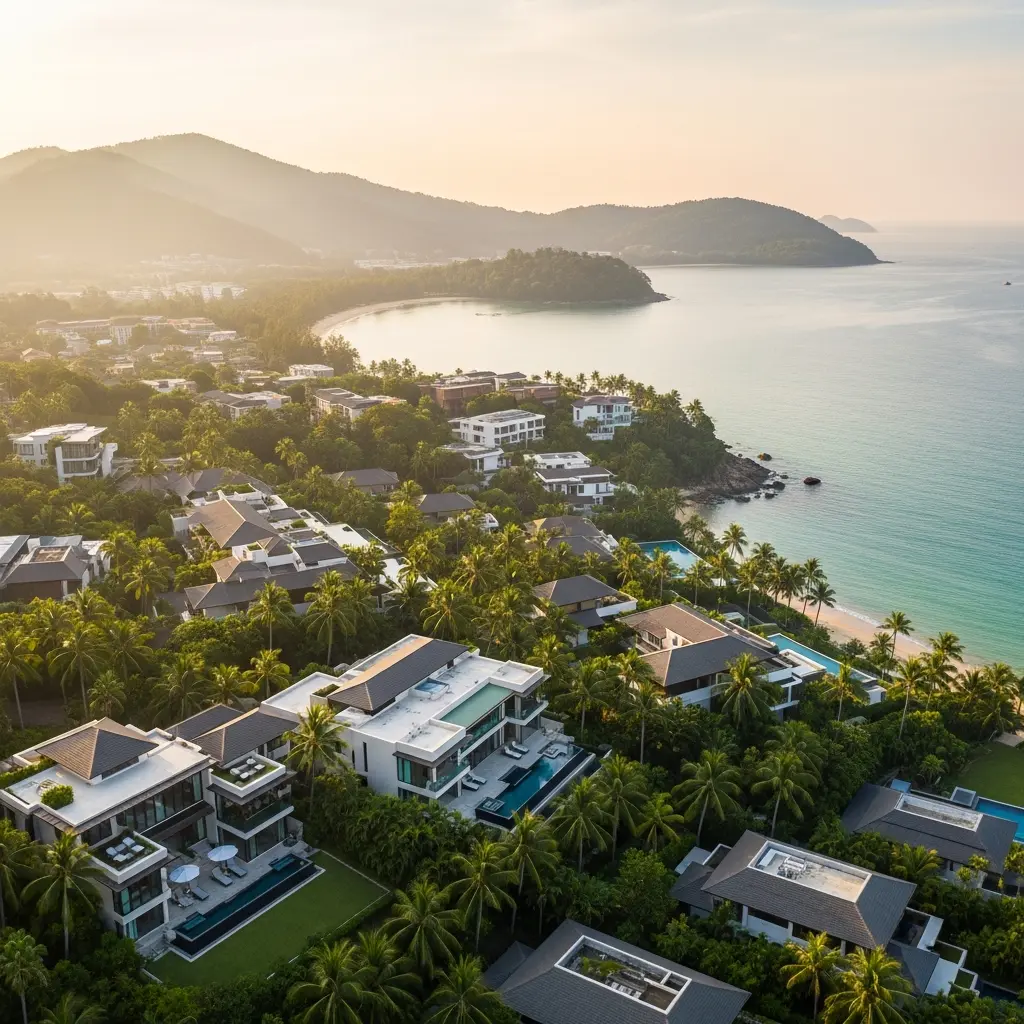
Phuket is priced by coastline. The west coast — sunset-facing, beach-fronted, resort-served — commands a premium over the east and the interior, and within that west coast the island reads as a series of corridors rather than one continuous market. Understanding which corridor a property sits in explains more about its likely behaviour than any single listing detail.
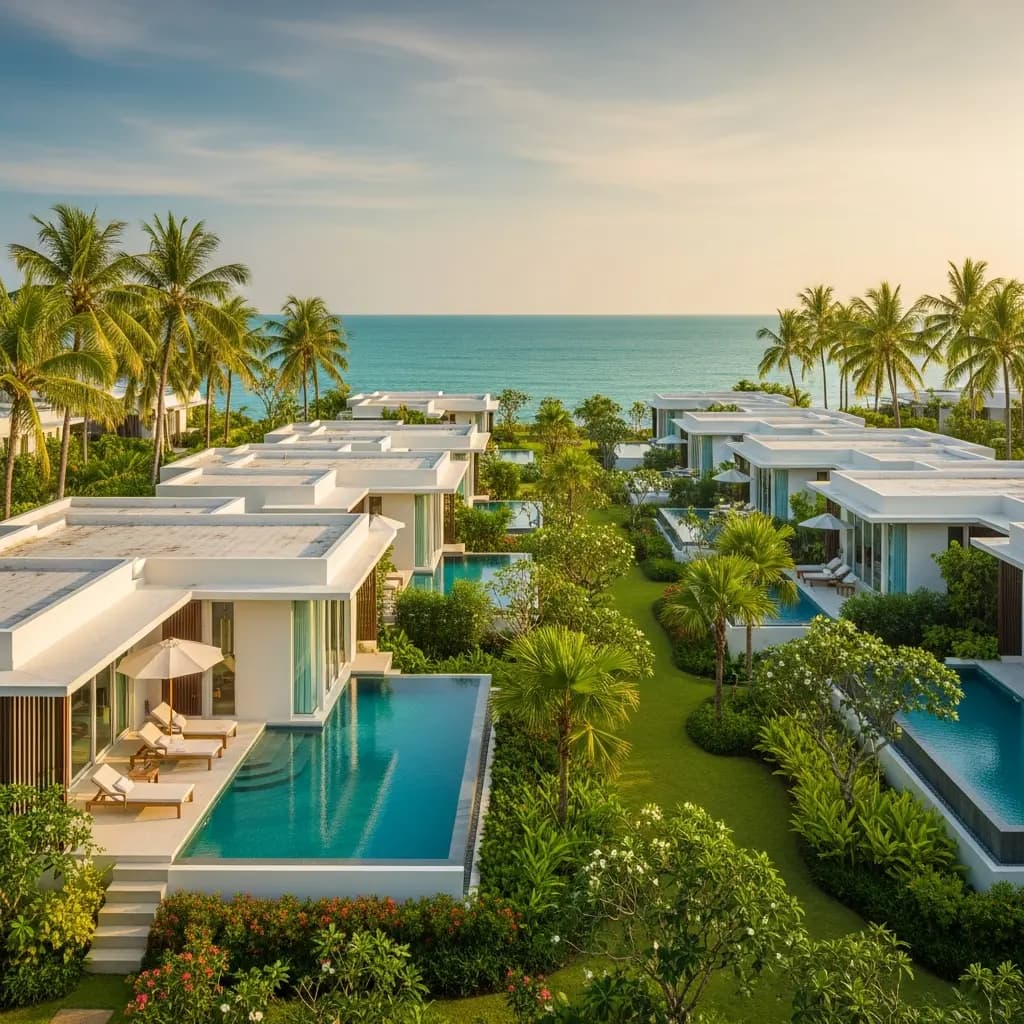
The northwest — Bang Tao, Laguna and Cherng Talay — is the flat, managed-estate corridor. Land is level, plots are laid out inside planned developments, and much of the stock comes with an estate management layer, shared amenities and an established rental infrastructure. It is the easiest part of the island to buy into passively and the hardest to buy into cheaply. The trade-off is that you inherit a service structure and its cost base along with the house.
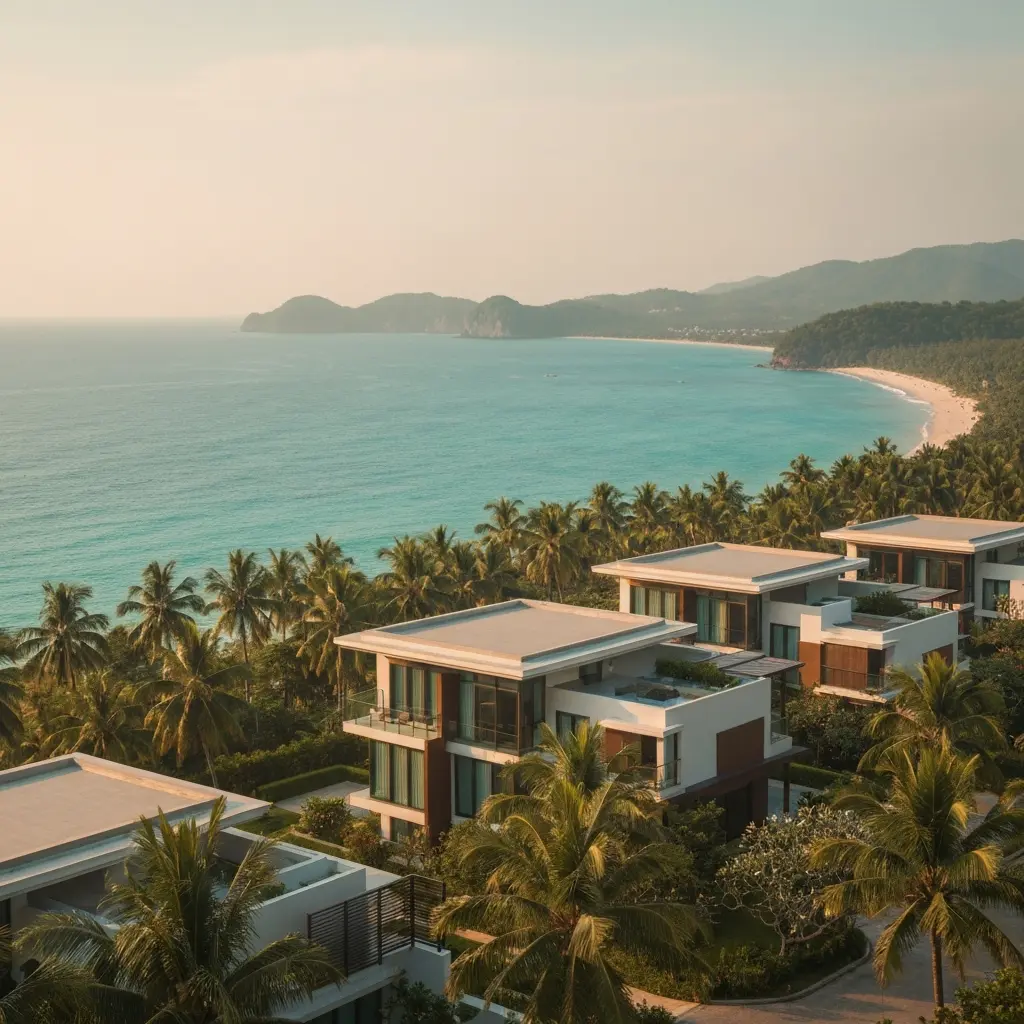
Moving south, Kamala and the Patong and Kalim headlands shift to hillside and oceanfront stock. Plots step up the slope, sea views are the primary asset, and access, retaining structures and drainage become genuine due-diligence items rather than footnotes. Patong's proximity cuts both ways: strong short-stay demand on one side, noise and traffic on the other, with Kalim sitting slightly apart from both.
The south — Nai Harn, Rawai and the surrounding headlands — is quieter and more residential in feel, with a larger year-round expatriate population and a slower rhythm than the northwest. Buyers who intend to live in the house more than they let it often end up here. The southeast and the interior are cheaper again, but they are a different proposition: less rental depth, less resale liquidity, more dependence on the specific plot.
None of these corridors is objectively better. They attract different buyers with different holding periods, and the correct starting question is which one matches how you actually intend to use the property.
Next Step
Related Reading
Continue with related guides and representative listings on this topic.
What you are actually buying
A villa is landed property, and foreigners cannot own land in Thailand — that is the Land Code, Section 86, with criminal exposure attached under Sections 111 to 113. No amount of marketing language changes it.
The lawful route for a foreign buyer is a registered lease over the land, standard term 30 years, usually presented as 30+30+30. Only the first 30 years is statutory; the renewals are contractual promises. That structure, the wording that makes renewals meaningful, and the purchase path around it are set out in full in our national landed-property guide, and the statutory background is covered in the freehold-versus-leasehold guide. Both are linked below.
A second reminder, kept short because it is covered elsewhere: a Thai limited company set up to hold land on a foreigner's behalf is a nominee structure, it is illegal, and it is under active enforcement following DBD Order No. 1/2026, effective 1 April 2026. If an agent presents company ownership as a compliant route to a villa, that is the end of the conversation.
This matters when you read listings. Villa listings on this site and elsewhere are frequently headlined as freehold. In practice, for a foreign buyer, the land underneath a landed villa is not foreign freehold — the structure will be a registered leasehold interest, sometimes paired with separate ownership of the building itself. Ask which specific instrument you are being offered, in writing, before any deposit moves. A registered lease and a usufruct are different legal instruments with different consequences; they are not interchangeable, whatever a brochure says.
Yields, and what erodes them
Net yields for Phuket villas commonly land around 4 to 6 percent (market estimate, mid-2026; source: Kalinka Thailand, Phuket Property ROI 2026 (April 2026)). Treat that as a band for the segment, not a promise for any individual house. Where a specific villa falls inside it depends on the fee structure it carries, how many weeks the owner blocks for personal use, and how the property is marketed.
Managed-estate stock in the northwest is the clearest illustration. Buying inside a resort-serviced estate buys you a functioning rental operation, but it also buys a cost stack — management commission, common-area fees, sinking fund contributions, maintenance and pool servicing, marketing costs — that sits between gross rental revenue and what reaches your account. We walk that gross-to-net calculation line by line in the Laguna rental yield guide rather than rebuilding it here. Read it before signing anything with a management agreement attached, and get the current fee schedule in writing rather than accepting an indicative figure.
Guaranteed-return offers deserve one sentence and a link: a guaranteed yield is prepaid rent, funded by a price premium that typically runs 10 to 15 percent (AI Property Phuket, 2026), and returns commonly compress to roughly 3 to 5 percent net once the guarantee period ends (Kalinka Thailand, 2026) — the full mechanics are in our guaranteed-ROI guide.
One deliberate omission. You will see occupancy percentages quoted freely in Phuket sales material. The published corridor benchmarks are drawn from the condominium segment, not villas, and applying them to a four-bedroom pool villa is not a like-for-like comparison. We do not carry that figure on this page for that reason, and you should ask any seller quoting one which segment it came from.
Letting the villa: the hotel-licence line
Any rental of under 30 days requires a hotel licence under the Hotel Act B.E. 2547. This is not a technicality that quietly goes unenforced, and it is the single most common gap between what a buyer assumes about nightly income and what the property is legally permitted to generate.
In practice, managed-estate villas in Phuket usually let on short stays under the umbrella of a licensed resort hospitality operation attached to the development. That is a legitimate arrangement, but it is a property-specific fact, not an estate-wide assumption. A villa in the same development as a licensed hotel operation is not automatically inside that licence.
So if nightly-rate revenue is central to your case for buying, resolve it before you commit: ask for written confirmation that the specific villa is covered by a hotel licence or by a licensed operator's programme, and see the document. Without that, plan the numbers around stays of 30 days and longer — a different rental market with different tenants, different rates and different seasonality, but a lawful one.
Next Step
Related Reading
Continue with related guides and representative listings on this topic.
The buying sequence in Phuket
The order matters more than most buyers expect, because several steps cannot be undone cheaply once money has moved.
First, the title on the underlying land. Establish which deed type applies, who holds it, whether it is encumbered, and whether the plot's access is legally secured rather than merely existing in practice. On hillside plots around Kamala, Kalim and the southern headlands, add slope, drainage and building-permit history to that list.
Second, appoint independent legal counsel — a lawyer you engage and pay, not one introduced by the seller or the agent. This should happen before the reservation deposit, not after.
Third, the lease and its terms. The lease must be registered at the Land Office to bind against third parties; an unregistered agreement in a drawer is not the same thing. Renewal terms, assignment rights, inheritance provisions and what happens if the developer changes hands all belong in the registered document or its annexes.
Fourth, the funds. Purchase money should be remitted into Thailand from abroad, and the receiving Thai bank issues the Foreign Exchange Transaction form once the transfer lands. The FET is issued by the bank — not by an exchange, not by the Land Department — and it is what evidences the inbound remittance later. If you are settling from digital assets, the inbound remittance still has to arrive in Thailand as foreign currency for the bank to issue an FET — converting to baht domestically produces no FET. Our crypto purchase guide covers the settlement routes.
Fifth, registration at the Land Office, where fees and taxes are settled and the lease is recorded. Agree in writing well in advance who pays which line of the transfer cost. The detailed cost and tax mechanics live in the national landed-property guide rather than being repeated here.
Buyer checklist before you commit
Six items to resolve in writing before a deposit becomes non-refundable.
- —Title deed type: Confirm the deed class on the underlying land, the registered owner and any encumbrances, using your own lawyer's search rather than a copy supplied by the seller.
- —Lease registration: Confirm the lease will be registered at the Land Office in your name and see the draft before you pay anything beyond a refundable reservation.
- —Renewal terms in writing: Check that renewal, assignment and inheritance provisions are drafted into the registered lease or its annexes, and understand that only the first 30-year term is statutory.
- —Fee schedule for managed estates: Obtain the current management commission, common-area charge, sinking fund and maintenance costs in writing, with the mechanism for future increases stated.
- —Hotel-licence status: If stays under 30 days matter to your income case, ask for documentary proof that the specific villa is covered by a hotel licence under the Hotel Act B.E. 2547 or by a licensed operator's programme.
- —Independent lawyer: Engage counsel you pay directly, with no relationship to the seller, developer or agency, and involve them before the reservation stage.
Next Step
Related Reading
Continue with related guides and representative listings on this topic.
Frequently Asked Questions
Can a foreigner buy a villa in Phuket outright?
Not the land. Foreigners cannot own land in Thailand under the Land Code, Section 86. The lawful route for a landed villa is a registered lease over the land, standard term 30 years, typically presented as 30+30+30 with only the first term statutory. A Thai company formed to hold the land on your behalf is a nominee structure, it is illegal, and it is under active enforcement following DBD Order No. 1/2026. Our national landed-property guide sets out the compliant path in detail.
Why are Phuket villas advertised as freehold if the land cannot be foreign-owned?
Because the word is used loosely in marketing. For a foreign buyer of a landed villa, the interest in the land will be a registered leasehold, sometimes combined with separate ownership of the building structure. Foreign freehold in Thailand applies to condominium units within the 49 percent per-building foreign quota by floor area, not to villas on their own plot. Ask the seller to name the exact instrument in writing and have your own lawyer read it.
What net yield should I expect from a Phuket villa?
Around 4 to 6 percent net is the common band for the Phuket villa segment (market estimate, mid-2026; source: Kalinka Thailand, Phuket Property ROI 2026 (April 2026)). Where a particular villa sits within that range depends heavily on the fee stack attached to it, especially inside managed estates, and on how many weeks you reserve for personal use. Our Laguna rental yield guide shows how the deductions accumulate from gross revenue to net.
Can I let my Phuket villa on nightly stays?
Only if the property is covered by a hotel licence under the Hotel Act B.E. 2547, which applies to any stay under 30 days. Many managed-estate villas let short-term under a licensed resort hospitality operation attached to the development, but that coverage is property-specific and should be evidenced in writing. Without it, build your income assumptions around stays of 30 days and longer.
Are guaranteed rental returns on Phuket villas worth paying for?
A guaranteed yield is prepaid rent. It is funded by a price premium that typically runs 10 to 15 percent (AI Property Phuket, 2026), and returns commonly compress to roughly 3 to 5 percent net once the guarantee period expires (Kalinka Thailand, 2026). The programme can still suit a buyer who values predictability during the early years, provided you price the premium honestly and read the post-guarantee terms. Our guaranteed-ROI guide covers the mechanics.
Which part of Phuket should I shortlist first?
Start from how you will use the property. The northwest corridor around Bang Tao, Laguna and Cherng Talay suits buyers who want flat, planned, professionally managed stock and accept the service cost that comes with it. Kamala and the Patong and Kalim headlands offer hillside and oceanfront positions where views drive value and access and slope engineering need close scrutiny. The south around Nai Harn and Rawai is quieter and more residential, and tends to attract owners who spend real time in the house.